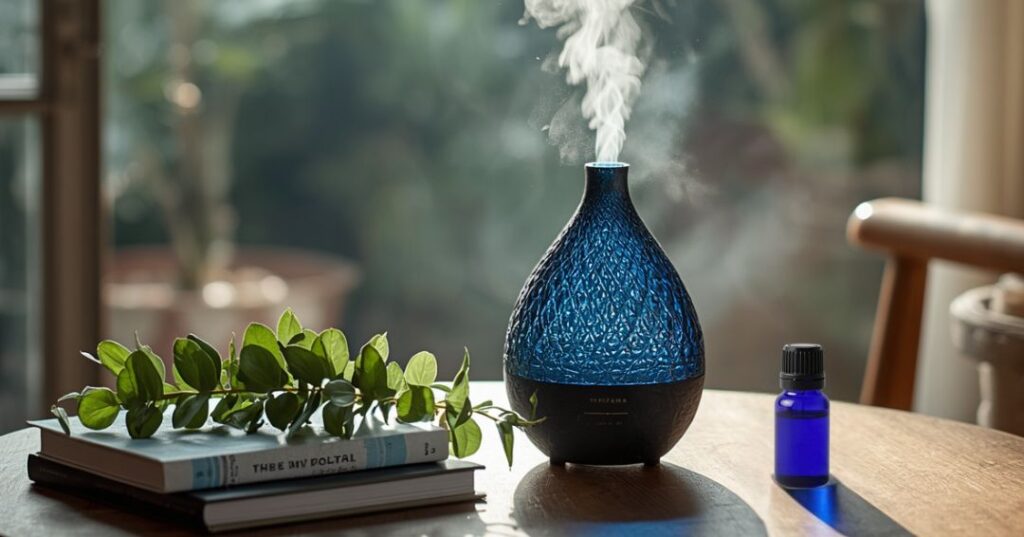
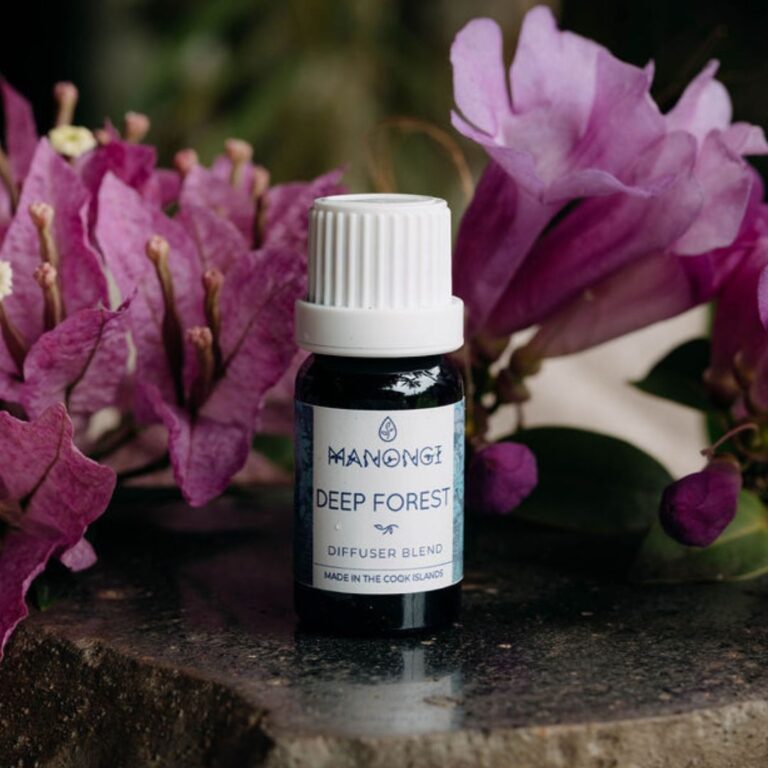
Essential oil diffuser purifying home air with natural antimicrobial mist

Essential Oils for Diffusers: Fighting Airborne Pathogens, Viruses and Mould

A mixture of just 2% of eucalyptus oil that evaporates in an aroma lamp will kill 70% of Staphylococcus bacteria in a room

Have you ever walked into a musty room? Maybe it’s humid cyclone season, or your home just feels stagnant. We all want our homes to feel safe, but invisible guests like bacteria, viruses, and mould spores often linger in the air we breathe.
For a long time, I struggled with prolonged bouts of allergies, relying on daily over-the-counter antihistamines that brought little relief.
This ongoing frustration pushed me to look deeper. As I read about inhalation and the respiratory system in Robert Tisserand’s Essential Oil Safety, I realised my problems might be from inside my home, not outside. This new perspective sparked further investigation.
Humidity = Life

This insight made sense, especially considering that mould and pathogens are common problems here in the Cook Islands, where ambient humidity levels reach well into the 80%-90% range. In such conditions, the characteristic mustiness of soft furnishings, bedding, and curtains is a telltale sign. For example, within days, tea towels can develop dark patches which are impossible to wash out.

While we can’t see these airborne threats, we certainly feel their effects. That’s when the symptoms become hard to ignore and prompt a search for solutions.

My own persistent symptoms are: 

  • Nose congestion
  • Red, itchy, or watery eyes
  • Headaches
  • Chronic fatigue
  • Brain fog
  • Digestive issues and food intolerances
But others can be:
 
  • Allergy-like, irritated throat
  • Ongoing pain not linked to exercise or injury.
  • Persistent dry cough that resists treatment
  • Skin breakouts and rashes
At this point, I started looking for practical solutions. That’s when I understood the power of diffusing essential oils to help reduce airborne pathogens.
 
Now, imagine freshening your home while naturally tackling airborne germs, mould spores, and viruses—all with the gentle power of essential oils in a diffuser. This method addresses both the ambience and the invisible health threats simultaneously.
 
This isn’t just about making your room smell like a spa (though that’s a nice bonus!). Science supports the use of specific essential oils, such as tea tree, eucalyptus, and clove, for their ability to actively reduce airborne microbes in your living space. In this guide, we’re going to explore the most effective oils, how they work, and crucially, how to use them safely to keep your family healthy.
What Are Airborne Pathogens?
Before we bring out the big guns (or rather, the little bottles), let’s quickly define what we are fighting to provide a clear foundation.

Airborne pathogens are microscopic organisms—including bacteria, viruses, and fungi (such as mould)that can be transmitted through the air. When someone coughs or sneezes, or when mould spores are disturbed, these tiny particles become aerosolised. They can linger in the air for hours, waiting to be inhaled.

Why Essential Oils Work Against Airborne Threat

It might seem too good to be true that a pleasant-smelling vapour could fight illness, but the mechanism is rooted in chemistry.

Essential oils are concentrated, volatile compounds from plants. ‘Volatile’ means they evaporate easily, letting you smell them quickly after opening.

When you diffuse essential oils for airborne pathogens, you are dispersing these tiny volatile molecules into the air.

Diffusing essential oils releases volatile molecules, such as aldehydes and phenols, which help break down bacteria, viruses, and fungi. Studies show these vapours can cut airborne microbes by 30-60%, naturally boosting indoor air quality.

For instance:

A study found tea tree and eucalyptus oils killed airborne influenza viruses when diffused.

Clove oil’s eugenol content fights viruses in vapour form, reducing infection risk.

Research confirms cinnamon bark and thyme vapours target bacteria like MRSA effectively.

This makes diffusers a smart, eco-friendly choice over chemical sprays, supporting respiratory health and reducing the spread of germs. 
Top Essential Oils for Airborne Pathogens, Viruses and Mould

Here are some research-backed oils ideal for diffusers, focusing on antiviral, antibacterial, and anti-mould properties:

  • Eucalyptus (Eucalyptus globulus & radiata)
If you’ve ever used a Vapour Rub, you know that distinct, opening scent of eucalyptus. It is excellent for respiratory support, helping to ease congestion while actively fighting airborne viruses, particularly influenza strains. It feels like taking a deep, clean breath.
Key benefits: Clears airborne viruses quickly. Proven antiviral against influenza and antibacterial in the air. Its vapours ease congestion too.
 
  • Tea Tree (Melaleuca alternifolia)
Tea Tree is the “Swiss Army Knife” of essential oils. It is a broad-spectrum antimicrobial, meaning it effectively fights bacteria, viruses, and fungi. It’s particularly good at tackling mould spores in damp areas of the home.
Key benefits: Broad-spectrum air disinfectant. Clears nearly all airborne influenza in minutes via nebuliser diffusion. Strong against bacteria and fungi.
 
  • Clove  (Syzygium aromaticum)
Don’t let the cosy, autumnal scent fool you; Clove is incredibly strong. It has a very high eugenol content, making it one of the most potent antibacterial and antiviral oils available. It’s fantastic for germ-heavy spaces, but should always be used in moderation due to its strength.
Key benefits: Potent for germ-heavy spaces. High eugenol fights viruses and bacteria in suspension or vapour. Pairs well with air purifiers.
 
  • Cinnamon Bark and Leaf (Cinnamomum zeylanicum)
Similar to clove, Cinnamon Bark and Leaf are “hot” oils that are powerful disinfectants. Research shows it is highly effective against tough airborne bacteria. Because it can irritate mucous membranes, it works best when blended with gentler oils, such as orange or lemon.
Key benefits: Strong disinfectant action.Targets airborne bacteria like MRSA effectively.
 
  • Thyme (Thymus vulgaris)
Thyme is a medicinal powerhouse. It is known to inhibit tough bacteria and provides strong respiratory support during sickness. I
Key benefits: Fights resistant bacteria. Inhibits MRSA and Pseudomonas; vapours reduce microbes indoors.
 
  • Oregano (Origanum vulgare)
Oregano is perhaps Nature’s strongest antibiotic. Rich in carvacrol, it is a potent antimicrobial that fights bacteria, viruses, and fungi. *Warning: It smells very pungent (like pizza), so it’s best used in blends rather than alone.
Key benefits: high in carvacrol, actively fights both viruses and bacteria.
 
  • Lemon (Citrus limon)
Lemon is the uplifting cleaner. While perhaps not as aggressively antiviral as clove, it is strongly antibacterial and antiseptic. Diffusing lemon brightens the mood while cleaning the air, making it perfect for daily preventative use.
Key benefits: Stops the growth of bacteria and fungi. Limonene and citral disrupt microbial cell membranes.
 
  • Silver Fir (Abies alba Mill.)
Silver fir essential oil (Abies alba) is a hidden gem in the world of antimicrobial essential oils, prized for its fresh, forest-like aroma and unique chemical profile. Silver fir oil’s volatility allows it to disperse effectively in the air, neutralising pathogens where they linger.
Key benefits: Broad-spectrum antimicrobial activity with Bornyl acetate, α-pinene, and camphene disrupts microbial cell membranes and inhibits metabolic processes, providing a multi-target approach to microbial control.
 
  • Peppermint (Mentha piperita)
Peppermint is a dynamic and multifunctional oil renowned for its cooling, invigorating scent and potent antimicrobial properties.
Key benefits: Its primary active compound, menthol, disrupts fungal cell walls, preventing spore germination.
 
  • Rosemary (Rosmarinus Officinalis)
Rosemary is useful for air and surface cleaning and respiratory health. A 2019 study found diffusing rosemary oil lowered airborne bacteria by 30–50% and fungi by 40–60%.
Key benefits: 1,8-cineole, camphor and a-pinene make Rosemary highly effective against antibiotic-resistant strains of pathogens.
 
  • Lemongrass (Cymbopogon citratus & Cymbopogon flexuosus) 

Both varieties of Lemongrass oils are highly effective at disrupting fungal cell walls and inhibiting spore germination, making them powerful allies against moulds such as Aspergillus niger and Penicillium chrysogenum. With broad-spectrum antibacterial activity, targeting both Gram-positive and Gram-negative bacteria. Also interfere with viral replication and disrupt viral envelopes.

Key benefits: Citral, geraniol, and myrcene disrupt bacterial cell membranes, leading to cell death. Lemongrass provides a natural, uplifting scent while actively purifying the air.

 
Some Gentle  Giants
  • Fragonia (Agonis fragrans)

Fragonia is a newer, exciting oil from Australia. It is unique because it exhibits clinical antiviral, antibacterial, and antifungal action, yet it is surprisingly gentle on the respiratory system. It smells lovely—a mix of floral, tea tree, and citrus notes—making it a great alternative for those who find Eucalyptus too harsh.

Key benefits: Unique chemical profile- terpinen-4-ol, α-pinene, and 1,8-cineole give it antiviral, antibacterial, and antifungal properties comparable to tea tree oil, but with a gentler profile.
 
  • Niaouli (Melaleuca quinquenervia)
Niaouli oil is less irritating than many other antimicrobial oils (e.g., cinnamon bark, oregano, clove), making it a strategic choice for environments where gentler oils are preferred (e.g., young children, pets). Its gentler yet effective nature, combined with broad-spectrum antimicrobial activity.
Key benefits: Rich in 1,8-cineole  and terpinen-4-ol, making it a formidable ally in inhibiting the proliferation of airborne bacteria and fungi.
 
  • Ravintsara (Cinnamomum camphora ct cineol)
Ravintsara essential oil is a star in aromatherapy and is considered one of nature’s most powerful antivirals. Effective at targeting airborne pathogens, protecting the respiratory tract, and strengthening immunity.
Key benefits: The oil’s 1,8-cineole, Alpha-terpineol and sabinene give it powerful, broad-spectrum anti-infectious properties that disrupt fungal cell walls, preventing spore germination. With these protective properties, Ravintsara helps safeguard your indoor environment with every diffusion.
Easy Diffuser Blends for Home Use

TROPICAL SHIELD BLEND

Target: Bacteria (including MRSA), fungi, and viruses.

Essential Oils:

  • 2 drops Cinnamon Leaf (gentler than bark, strong antimicrobial)
  • 2 drops Clove (synergistic with cinnamon, potent antifungal)
  • 1 drop Lemon (brightens scent, enhances antimicrobial effects).

Usage:

  • Diffuse for 15–30 minutes in well-ventilated areas (e.g., bathrooms, kitchens).
  • Best for: Post-cooking, after showers, or in sickrooms.

MOULD ERASER BLEND

Target: Mould spores (Aspergillus niger, Penicillium chrysogenum).

Essential Oils:

  • 3 drops Silver Fir (gentle yet effective against mould)
  • 2 drops Lemongrass (high citral content disrupts fungal cell walls)
  • 1 drop Tea Tree (broad-spectrum antifungal)

Usage:

  • Diffuse for 30–60 minutes in mould-prone areas (e.g. bathrooms, basements, laundry rooms)
  • Best for: Long-term mould control in tropical homes.

VIRUS CONTROL BLEND

Target: Viruses, bacteria (including MRSA), fungi (mould spores), 

  • 2 drops Eucalyptus radiata (effective against influenza and other respiratory viruses)
  • 2 drops Tea Tree(gentle yet effective against airborne bacteria and viruses, adds a fresh forest note)
  • 1 drop Thyme (terpinen-4-ol targets the lipid membranes of enveloped viruses)
  • 1 drop Lemon (brightens scent, inhibits viral replication)

Usage: 

  • Use for 20–30 minutes in living areas, bedrooms or sickrooms during cold/flu season or after exposure to viruses.
  • Best for: Living areas, sickrooms, or high-traffic areas in humid climates.

RESPIRATORY GUARDIAN BLEND

Target: Airborne pathogens and respiratory congestion.

Essential Oils:

  • 2 drops Ravintsara (expectorant, antiviral)
  • 2 drops Peppermint (clears congestion, antimicrobial)
  • 1 drop Thyme (strong antibacterial, immune support)

Usage:

  • Diffuse for 20–30 minutes in bedrooms or living areas.
  • Best for: Cold/flu season or respiratory support.

ENUA FRESH BLEND

Target: Bacteria, fungi, and odours (localised tropical freshness).

Essential Oils:

  • 2 drops Niaouli (gentle antimicrobial, safe for frequent use)
  • 2 drops Lemon (brightens scent, enhances antimicrobial effects)
  • 1 drop Lavender (calming, reduces respiratory irritation)

Usage:

  • Diffuse for 30–60 minutes in living areas, kitchens, or guest spaces.
  • Best for: Daily air purification in tropical homes.

THIEVES TROPICAL BLEND 

Target: Bacteria, fungi, and viruses (similar to the classic “Thieves” blend).

Essential Oils:

  • 2 drops Clove (potent antimicrobial)
  • 2 drops Lemon (freshens air, enhances antimicrobial effects)
  • 1 drop Cinnamon Leaf (gentler than bark, strong antimicrobial)
  • 1 drop Eucalyptus (respiratory support)

Usage:

  • Diffuse for 15–30 minutes in sickrooms or high-risk areas.
  • Best for: Immune support during illness.

Essential Safety Guidelines

→ Dilute Properly: For diffusion, follow device instructions with the correct level of water—never apply undiluted to your diffuser.

→ Start Low: Use 1-6 drops first to gauge sensitivity, then increase up to 10 drops.

→ Exposure: To avoid overexposure, which increases the risk of sensitivity (headaches, watery eyes…), prefer intermittent diffusion sessions of 15 to 30 minutes, repeated every 30 minutes to 1 hour.

→ Quality First: Pick organic, therapeutic-grade from trusted sources like Zurma (https://zurma.co.nz).

→ Who Should Skip or Consult:

  • Pregnant individuals (especially first trimester).
  • Kids under 2; use sparingly for older children.
  • Those on medications or with sensitive skin—check with a doctor.
  • Store your blends in dark glass, cool spots, away from pets/kids. 

Conclusion

Diffusing essential oils offers a natural way to combat airborne pathogens, mould, and viruses, backed by studies showing real reductions in microbes. Integrate these blends into your routine for cleaner air and better well-being—aligning perfectly with holistic home care.

DIFFUSER BLENDS AT MANONGI

References

BOOKS

Fischer-Rizzi, S. (1997). Complete Aromatherapy Handbook: Essential Oils for Radiant Health. Sterling Publishing.

Tisserand, R., & Young, R. (2014). Essential Oil Safety: A Guide for Health Care Professionals. Churchill Livingstone.

RESEARCH

Chao, S.C., Young, D.G., & Oberg, C.J. (1998). Effect of a Diffused Essential Oil Blend on Bacterial Bioaerosols. Journal of Essential Oil Research, 10(5), 517–523.

Doran, A.L., Morden, W.E., Dunn, K., & Edwards-Jones, V. (2009). Vapour-phase activities of essential oils against antibiotic-sensitive and resistant bacteria including MRSA. Letters in Applied Microbiology, 48(4), 387–392.

Inouye, S., Takizawa, T., & Yamaguchi, H. (2001). Antibacterial activity of essential oils and their major constituents against respiratory tract pathogens by gaseous contactJournal of Antimicrobial Chemotherapy, 47(5), 565–573.

López P, Sanchez C, Batlle R, Nerín C. Vapor-phase activities of cinnamon, thyme, and oregano essential oils and key constituents against foodborne microorganisms. J Agric Food Chem. 2007 May 30;55(11):4348-56. doi: 10.1021/jf063295u. Epub 2007 May 8. PMID: 17488023.

Voravuthikunchai, S. P., Minbutra, S., Goodla, L., Jefferies, J., & Voravuthikunchai, S. (2012). Mixtures of Essential Oils in an Air Conditioning Prototype to Reduce the Prevalence of Airborne Pathogenic Bacteria. Journal of Essential Oil Bearing Plants, 15(5), 739–749.

Lanzerstorfer, A., et al. (2019). The influence of air-dispersed essential oils from lemon (Citrus limon) and silver fir (Abies alba) on airborne bacteria and fungi in hospital rooms. Journal of Environmental Science and Health, Part A, 54(4), 256–260.

Krist, S., et al. (2008). Antimicrobial effect of vapours of terpineol, (R)-(-)-linalool, carvacrol, (S)-(-)-perillaldehyde and 1,8-cineole on airborne microbes using a room diffuserFlavour and Fragrance Journal, 23(5), 353–356.

Gismondi, A., et al. (2021). The antimicrobial activity of Lavandula angustifolia Mill. essential oil against Staphylococcus species in a hospital environment. Journal of Herbal Medicine, 26, 100426.

Chaieb, K., et al. (2007). The chemical composition and biological activity of clove essential oil. Phytotherapy Research, 21(8), 764–772.

Doran, A.L., et al. (2009). Letters in Applied Microbiology.

Voravuthikunchai, S.P., et al. (2012). Mixtures of essential oils in an air conditioning prototype to reduce the prevalence of airborne pathogenic bacteria. Journal of Essential Oil Bearing Plants, 15(3), 343–352.

Tian, F., et al. (2019). Comparison of the antifungal and antiaflatoxigenic potential of liquid and vapor phase of Thymus vulgaris essential oil against Aspergillus flavus. Journal of Food Protection, 82(11), 2044–2048.

Bassolé, I.H.N., & Juliani, H.R. (2012). Essential oils in combination and their antimicrobial properties. Molecules, 17(4), 3989–4006.

Nematollahi, N., et al. (2020). Volatile chemical emissions from essential oils with therapeutic claims. Air Quality, Atmosphere & Health, 14(3), 365

Shopping Cart
Scroll to Top