
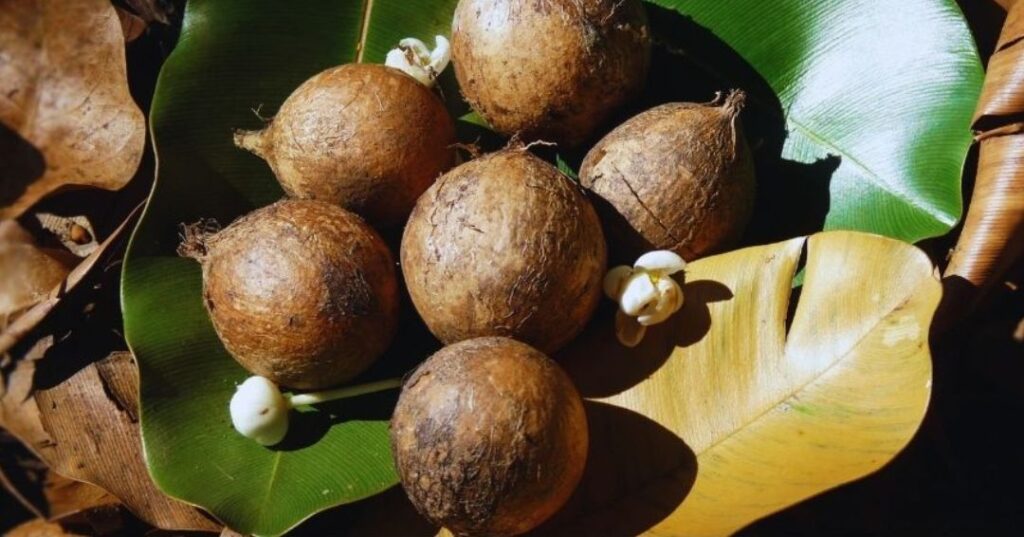
Tamanu nuts

Tamanu Oil: The Sacred Healing Oil of the South Pacific

With this unusual composition, Tamanu absorbs deeply into all three layers of the skin where it has been demonstrated to rapidly regenerate new skin, repair nerves and diminish scarring.

What Is Tamanu Oil?

Walk along almost any coastal road in the Cook Islands, and you’ll find it. A broad, generous tree with glossy dark leaves, clusters of small white flowers, and round green nuts are scattered across the sandy ground beneath it.
This is the tamanu tree (Calophyllum inophyllum). The dark green oil, cold-pressed from its sun-dried nuts, has been one of the Pacific’s most trusted healing treasures for over 1,000 years.
You may know it by different names across the Pacific:
 
  • Tamanu — Cook Islands and Tahiti
  • Kamanu — Hawaiʻi
  • Fetau — Samoa
  • Dilo — Fiji
  • Faraha — Madagascar
Same tree. Same oil. Same remarkable healing tradition. This tradition was carried across the Pacific by people who understood its value, long before modern science could explain it.
 
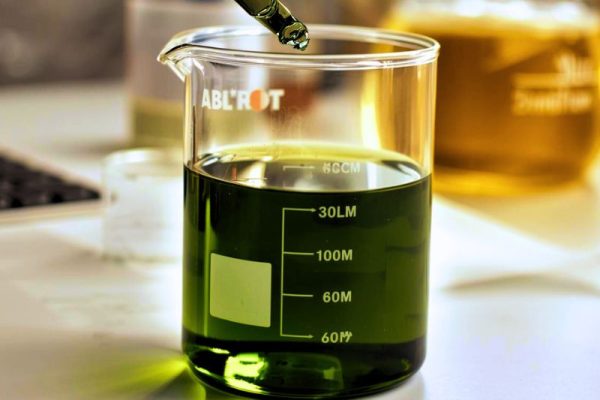
Tamanu oil is rich, deeply green, and has a distinctive, earthy, nutty aroma. It absorbs well into the skin, leaving it nourished rather than greasy. Its chemistry — as we’ll explore shortly — is genuinely unlike anything else in the natural world. To understand why tamanu is so extraordinary, let’s look at how it is regarded in the Cook Islands and Polynesia.

Sacred in the Cook Islands and Polynesia

A Tree That Belongs to the People

The Tamanu tree is native to the coastal Indo-Pacific and thrives in the Cook Islands. It grows in conditions that would challenge most plants—salty air, sandy soil, and strong tropical sun. In many ways, it reflects the people around it: deeply rooted, resilient, and quietly generous.
Across Polynesia — from the Cook Islands to Tahiti, Hawaiʻi to Samoa — the tamanu tree has never been considered ordinary. In many island traditions, it is viewed as sacred — a living ancestor, a bridge between the physical and spiritual worlds.
 
Traditional healers didn’t simply walk up and harvest the nuts. There was a ceremony. Permission was asked of the tree, and gratitude was offered. This reflected a worldview that is deeply Polynesian—one that understands humans as part of nature, not apart from it.
That philosophy is still alive in the Cook Islands today. Now, let’s see how the knowledge and use of Tamanu oil have been passed down through generations.
 

Healing Knowledge Passed Through Generations

For over 1,000 years, Pacific Island healers—including the ta’unga of the Cook Islands—used Tamanu oil as trusted medicine. It was applied to wounds, burns, painful joints, and severe skin conditions. This knowledge was not passed down in textbooks, but in hands and memory, from healer to healer, mother to daughter, elder to child.
This traditional knowledge is a precious inheritance in the Cook Islands.
 

Tamanu in Everyday Cook Islands Life

Beyond ceremony and healing, tamanu has always had a practical place in daily island life. The wood was used for canoes and tools. The flowers attracted bees. The broad canopy sheltered families for generations.
 
The oil itself was traditionally prepared by collecting the nuts and allowing them to dry and ferment in the sun for several weeks. This patient process transforms the pale, raw kernel into rich, dark green oil. That unhurried approach reflects island values. Good things take time and cannot be rushed.
 
With that foundation, let’s explore the science behind tamanu’s special qualities.
Green coloured Tamanu oil in a beaker

What Makes It So Special - The Science

The ta’unga of the Cook Islands didn’t need a chemistry lab to know tamanu worked. But understanding the science helps us appreciate just how remarkable this oil truly is.
 

A Chemistry Unlike Any Other Oil

Most carrier oils are valued for their fatty acid profiles – and tamanu has a beautiful one:
That last fatty acid, caulophyllic acid, is unique to tamanu oil. This rare compound is believed to play an important part in supporting the skin’s renewal process, contributing to Tamanu oil’s ability to help the skin heal and regenerate in ways not found in most other natural oils.
 

The Healing Compounds

In addition to fatty acids, Tamanu oil contains bioactive compounds that contribute to its healing properties. Calophyllolide is known to help reduce swelling and support the healing process of the skin.
 
These compounds work together for a triple-action effect: 
 
  • Neoflavonoids  –  Help reduce scarring and support tissue repair
  • Coumarins – Natural antimicrobial compounds that prevent infection
  • Xanthones – Antioxidants that protect newly forming skin cells

This makes Tamanu oil unique among natural skin remedies.

Modern science caught up to the islands. Not the other way around. With this new understanding, it’s clear why Tamanu oil is so valued for skin and healing.
 

Healing Properties and Skin Benefits

What Tamanu Oil Actually Does


🌿 Regenerative –  Stimulates new cell growth and tissue repair. This is caulophyllic acid at work, actively encouraging your skin to rebuild itself.
🌿 Anti-inflammatory – Calophyllolide reduces redness, swelling, and irritation — particularly helpful for reactive or inflamed skin.
🌿 Antimicrobial – Coumarins help prevent bacterial infection, making tamanu valuable for skin that is healing or compromised.
🌿 Analgesic – Soothes nerve and muscle discomfort when applied topically. Traditional healers used it for painful joints and sore muscles for good reason.
🌿 Cicatrisant –  Supports healthy scar formation and helps existing scars fade gradually over time.
 

Where It Shines

✨  Scars and post-wound healing  – One of Tamanu’s most celebrated uses. Whether from surgery, acne, injury, or stretch marks, it helps scars fade and skin heal smoothly.

✨ Dry, mature, or damaged skin – Deeply nourishing without being heavy. It supports the skin’s natural barrier and restores softness over time.

✨ Eczema and psoriasis support – Its anti-inflammatory and antimicrobial properties make it a gentle option for calming flare-ups and soothing reactive skin. 

✨ Acne-prone skin – Antimicrobial action addresses acne-causing bacteria while calming redness and inflammation.

✨ Sunburn and minor burns – Pacific Island communities have used Tamanu on burns for centuries. Its cooling, anti-inflammatory nature supports the healing process beautifully.

✨ Joint and muscle discomfort – Massaged into sore areas, Tamanu offers genuine, grounding comfort.
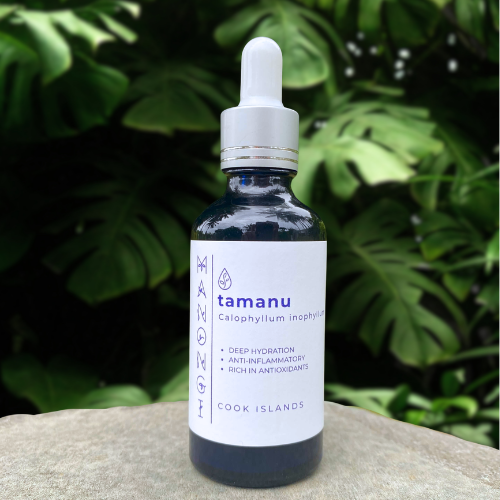
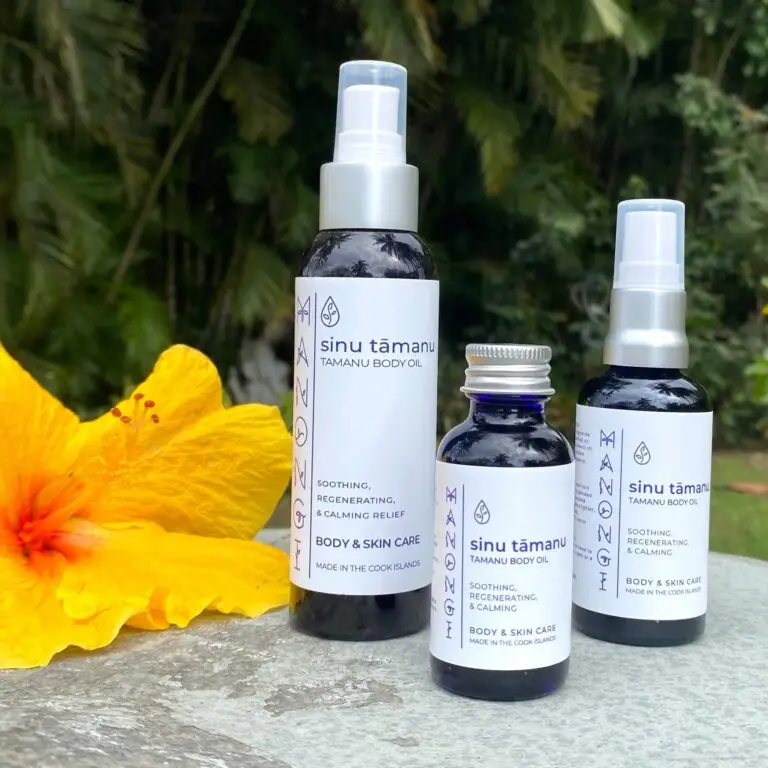
How to Use Tamanu Oil

For face and body:
 
  1. Start with clean, slightly damp skin.
  2. Warm 2–4 drops between your fingertips
  3. Press gently into the skin rather than rubbing.
  4. Allow 5–10 minutes to absorb
For scars:
 
  1. Apply 2–3 drops directly to the scar.
  2. Massage in small, gentle circular motions for 1–2 minutes
  3. Use twice daily — morning and night.
  4. Be patient and consistent; skin regeneration takes time.
For sore muscles and joints:
 
  1. Warm 5–8 drops in your palms
  2. Massage into the affected area using firm, circular strokes.
  3. Cover with a warm cloth for 10–15 minutes if desired.

Blending Tips

Tamanu pairs beautifully with rosehip oil for enhanced scar support. It also works well with coconut oil for a spreadable body treatment.
With essential oils: lavender, frankincense, and helichrysum are wonderful companions, each adding complementary healing properties.
 
Tamanu has a strong, earthy, nutty aroma. Blending it with a lighter carrier oil or a drop of lavender softens the scent beautifully.

Final Thoughts

Tamanu oil is one of those rare things that genuinely lives up to its reputation.
 
It’s been trusted in the Cook Islands and across Polynesia for over a thousand years — not because of marketing, but because it works. The science now confirms what traditional knowledge has always held. This oil is something special.
 
What makes Tamanu truly meaningful, though, isn’t just the chemistry. It’s the heritage. Every bottle of authentic, ethically sourced Tamanu oil carries the wisdom of the ta’unga, the patience of the traditional harvesting process, and the deep relationship between island people and the land they call home.
 
Use it with care. Use it consistently. And let it do what it’s been doing beautifully for centuries. 🌿

TAMANU AT MANONGI

References

The Power of the Seed,  Susan Parker

Tamanu oil and skin active properties: from traditional to modern cosmetic uses, P. Raharivelomanana et al., Published by EDP Sciences, 2018 https://doi.org/10.1051/ocl/2018048

Potential of Tamanu (Calophyllum inophyllum) Oil for Atopic Dermatitis Treatment. Pribowo A, Girish J, Gustiananda M, Nandhira RG, Hartrianti P. Evid Based Complement Alternat Med. 2021 Dec 26;2021:6332867. doi: 10.1155/2021/6332867. PMID: 35069754; PMCID: PMC8782620.

Shopping Cart
Scroll to Top